How to balance cost and quality in custom metal gifts begins with a practical question: what must the recipient notice, and what can remain simple? A commemorative medallion, branded keychain, or desk award may need crisp engraving and durable plating. It may not need a complex mold or several decorative finishes. Small choices matter. A thinner base can reduce material costs, but it may also make a gift feel flimsy in the hand. The cheapest quote is not always the best value.
Quality-management expert Philip Crosby wrote, “Quality is free. It’s not a gift, but it is free.” His point was that preventing defects can cost less than fixing them later. Applied to custom metal gifts, that means checking a sample, confirming dimensions, and approving the finish before production. Ask suppliers how they control color consistency, edge smoothness, and engraving depth. These details are easy to overlook.
There is no universal formula. Order quantity, metal type, packaging, and delivery schedule all affect the final price. A zinc-alloy piece may suit a large event, while a heavier brass item may better fit a small recognition program. I would not assume either option is automatically superior. That needs testing. Compare samples under ordinary lighting, inspect them closely, and consider how they will be handled after the event. A modest design with reliable finishing can often outperform an elaborate piece with uneven execution. Still, budgets can force compromises. The important step is choosing them deliberately, rather than discovering them after delivery.
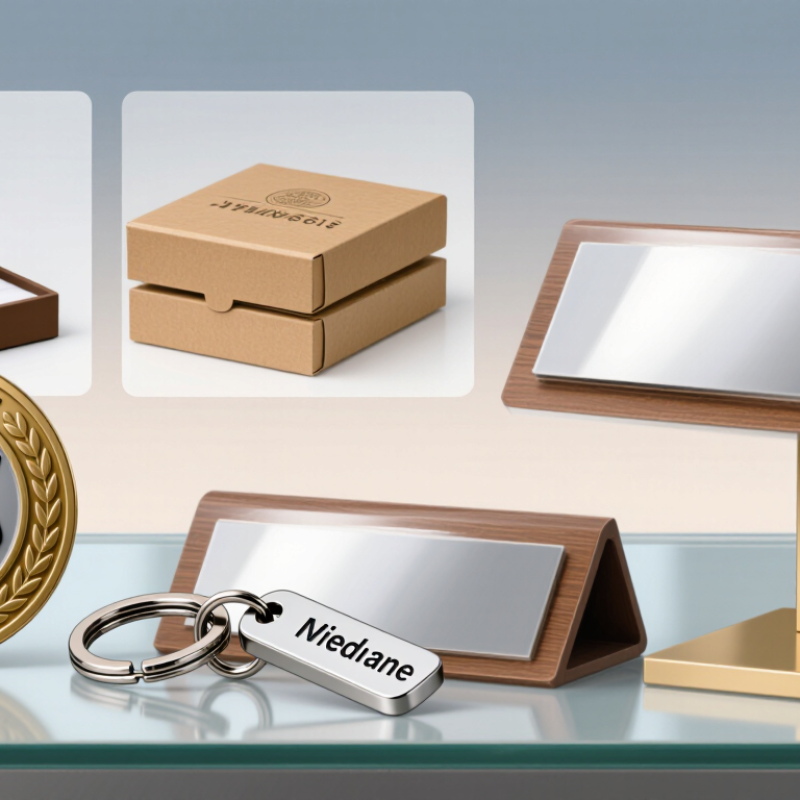
Understanding cost and quality in custom metal gifts starts with the specification. Metal type, thickness, engraving depth, finish, and order quantity all affect price. A thin zinc-alloy tag may cost less than a stainless-steel piece, but it can feel lighter and show wear sooner. Ask for the alloy, dimensions, finish, and a physical sample before comparing quotes. Details matter.
Raw material is only part of the cost. The USGS 2024 Mineral Commodity Summaries estimated that about 60 million metric tons of iron and steel scrap were consumed in the United States in 2023. That figure shows the scale of metal recycling, not the price or quality of a finished gift. Skilled cutting, polishing, inspection, and packaging still shape the final result. Labor supply can also affect lead times and quotes: a 2024 Deloitte and Manufacturing Institute study projected that up to 1.9 million U.S. manufacturing jobs could go unfilled by 2033. For a small gift order, ask which steps are included in the quoted price and how defects are handled. A low quote may leave out careful finishing. Not just the metal.
Custom metal gift costs depend on more than the blank piece of metal. Alloy choice, thickness, order size, engraving depth, and finish all affect the quote. A 2-millimeter steel desk plate needs less material than a thick cast award. Yet a polished edge or brushed finish still takes skilled labor. Tooling can also raise the unit price on small orders. Details matter.
Commodity and energy prices add uncertainty. The U.S. Geological Survey reported an average COMEX copper price of $3.85 per pound in 2023, compared with $4.01 in 2022. This is a useful indicator, not a direct price for finished gifts. The U.S. Energy Information Administration reported average U.S. industrial electricity prices of 7.74 cents per kilowatt-hour in 2023. Regional rates differ, and cutting, plating, or heat treatment can increase energy use. A quote can still miss small costs, such as rejected pieces or protective packaging.
Tips: Ask suppliers to itemize material, setup, finishing, and shipping. Compare the same alloy, dimensions, and finish—not just the unit price. For a small run, simplify the engraving or choose a standard finish. Request a physical sample when color or texture matters.
A custom metal gift earns lasting value through more than a bright finish. The base alloy, thickness, and surface treatment all affect how it handles daily use. World Stainless Association’s Stainless Steel in Figures 2024 reports 58.4 million tonnes of stainless steel production in 2023. That scale shows the material’s broad industrial use, but it does not guarantee a well-made gift. Ask for the grade, not just “stainless steel.” A thin key tag can still bend, and a polished surface can hide rough edges.
Durability also depends on the environment. The U.S. Geological Survey’s Mineral Commodity Summaries 2024 estimates global copper mine production at 22 million tonnes in 2023. Copper and copper alloys are widely used, yet untreated surfaces can tarnish with handling and moisture. That change may suit some designs. It may disappoint recipients expecting a permanent shine. For metal gifts, check whether coatings are specified and whether engraving leaves sharp burrs. Salt-spray testing under ISO 9227 can compare corrosion resistance under controlled conditions, but test hours do not translate neatly into years of real-world life. Ask for the test method and results. Small details matter. A slightly uneven edge is easy to miss in a sample photo, but noticeable in the hand.
Typical density of common gift-making metals (g/cm³)
Higher density can give a gift a more substantial feel, but it does not guarantee better durability. Alloy grade, finishing, and workmanship also matter, while material and production choices affect cost. These are representative nominal densities; exact values vary by alloy.
Why Balance Cost and Quality in Custom Metal Gifts?
Buyers comparing custom metal gifts often focus on the quoted unit price. Yet a low price can hide thin material, uneven plating, sharp edges, or weak attachment hardware. These details matter when a gift will be handled often or displayed for years. The 2023 Ad Impressions Study from the Advertising Specialty Institute reports that 85% of consumers remember the advertiser on a promotional product. That figure supports the value of a lasting impression, but it does not prove that premium materials guarantee better results. Buyers still need to inspect samples and specifications.
A practical comparison looks beyond the price per piece. Ask about metal thickness, finish consistency, color matching, and whether the design is checked before production. A small test order can reveal scratches or a clasp that feels flimsy. It may add time and cost. Still, skipping it can be a false saving. I have seen buyers over-specify finishes, too; a costly coating may add little value if the item is mainly kept in a drawer.
Tips: Set a minimum quality standard before requesting quotes. Compare identical specifications, not just headline prices. Request a physical sample, check its edges and weight, and confirm the acceptable defect rate in writing. Leave room for compromise. A simpler design in dependable metal can feel more considered than a complex, poorly finished piece.
| Material | Approx. Density | Indicative Cost Pressure | Common Gift Applications | Quality and Durability Considerations | Buyer Trade-Off |
|---|---|---|---|---|---|
| Zinc alloy | About 6.6–7.1 g/cm³ | Often low to medium for larger production runs; custom die tooling can add upfront cost. | Cast medallions, keychains, badges, and detailed souvenir pieces. | Die casting can reproduce intricate shapes. Plating quality and protective finishing affect appearance and resistance to wear. | Can deliver detailed designs at a competitive per-piece cost when quantities justify tooling; less attractive for very small orders. |
| Aluminum | About 2.7 g/cm³ | Often low to medium, depending on the grade, machining, and finish. | Engraved tags, desk accessories, lightweight awards, and drinkware components. | Lightweight and naturally forms a protective oxide layer. Anodizing can add color and improve surface protection. | A practical way to reduce shipping weight and material use, though it may feel less substantial than denser metals. |
| Stainless steel | About 7.7–8.0 g/cm³ | Often medium; grade, thickness, forming, and finishing influence the final cost. | Reusable drinkware, bottle openers, plaques, keychains, and corporate keepsakes. | Many common grades offer good corrosion resistance and wear performance. Laser marking or engraving provides a durable design without relying on a surface coating. | A strong choice for gifts expected to see regular use; the added material or finishing cost can be worthwhile for longer service life. |
| Brass | About 8.4–8.7 g/cm³ | Often medium to high; alloy choice, machining, polishing, and plating affect cost. | Engraved plates, premium desk gifts, nameplates, and decorative accessories. | Its warm appearance and weight can create a premium impression. Uncoated brass can tarnish over time and may need polishing. | Suitable when presentation and perceived value matter; buyers should consider whether a protective finish or ongoing care is appropriate. |
| Copper | About 8.96 g/cm³ | Often medium to high; price and fabrication requirements can vary considerably. | Decorative plaques, engraved accessories, and specialty gift items. | Distinctive color and high density give a substantial feel. Exposed copper naturally changes appearance as it develops a patina. | Offers a distinctive look, but buyers should decide whether natural aging suits the design or a coating is needed to preserve the original finish. |
| How to read the cost guidance: Cost-pressure levels are comparative, not fixed market prices. Actual quotes depend on order quantity, dimensions, material grade, tooling, decoration, finishing, packaging, and shipping. Density figures are approximate and vary by alloy. | |||||
Choosing the right balance starts with the gift’s purpose, not the fanciest finish. A desk award handled daily needs smooth edges, a stable base, and durable lettering. A one-time event keepsake may justify simpler packaging and a lighter finish. Ask suppliers to quote the same design at two or three quality levels. Compare material thickness, engraving depth, coating, and inspection steps—not just the unit price. Small details matter. A deep engraving can remain legible after years of handling, while a thin coating may show scratches around the edges. ASQ’s quality-cost guidance notes that poor quality can consume 15–20% of sales in some organizations. That figure is not a forecast for gift projects, but it shows why rework and rejected pieces deserve a place in the budget.
Set acceptance criteria before production. Specify color tolerance, logo position, burr limits, and how many samples you will inspect. For a small run, request a physical prototype; for a large order, approve a sample from the actual production process. Deloitte’s 2024 manufacturing outlook found that 86% of surveyed executives expect smart manufacturing to support competitiveness over the next five years. For buyers, the practical lesson is to ask how a supplier tracks repeatability, not to pay automatically for high-tech equipment. A clear inspection record can be more useful than impressive machinery. Be honest about trade-offs: polished surfaces look refined, but fingerprints show quickly. The cheapest option may still be right. Just test it first.
Alloy grade, thickness, and surface treatment all matter. A shiny finish cannot hide thin metal or rough edges.
No. Ask for the specific grade and material thickness. Even a small key tag can bend if it is too thin.
Not always. Handling and moisture can cause untreated copper to tarnish. That change may suit the design, but recipients may expect lasting shine.
Feel the edges, check the weight, and inspect the clasp. Look closely for scratches, uneven plating, or tiny burrs.
Compare the same specifications, including thickness, finish, engraving, and inspection steps. A lower price may mean weaker hardware.
It can reveal a flimsy clasp or finish problems before a large order. It adds time, though. Sometimes that feels frustrating.
Set limits for color variation, logo position, and edge burrs. Also agree on how many samples you will inspect.
No. Polished surfaces look refined, but fingerprints show quickly. A simpler finish may be more practical for daily use.
Ask for inspection records and a sample from the actual production process. Impressive machinery alone is not proof.
It can help lettering remain legible after handling. Still, engraving depth should suit the design and metal thickness.
Custom metal gifts must balance affordability with the appearance, durability, and finish recipients expect. Production costs can vary with material choice, item size, design complexity, manufacturing methods, order quantity, and finishing details. Meanwhile, quality depends on factors such as consistent workmanship, reliable materials, precise customization, and a finish suited to how the gift will be used. Understanding these elements helps buyers see why the lowest price may not deliver the best overall value.
How to balance cost and quality in custom metal gifts depends on each project’s priorities. Buyers can set a clear budget, identify the features that matter most, and compare options based on both price and expected performance. Simplifying a design, choosing practical materials, or adjusting order quantities may help control costs without compromising essential quality. By weighing upfront expense against durability, presentation, and recipient expectations, buyers can select gifts that meet their goals and offer lasting value.

TOP Crafts