Promotional products are changing in 2026. Buyers now expect useful, durable, and memorable items. A logo alone rarely creates lasting value. A compact product should solve a real problem, not simply carry a brand name. A travel mug might include a secure lid, temperature markings, and a removable cleaning seal. Each feature must support daily use.
This guide explains how to design multi-functional promotional products with practical discipline. It considers audience needs, product purpose, materials, branding, and manufacturing limits. Research should begin with real user behavior. Observe how people carry, clean, store, and reuse an item. Speak with sales teams and customers. Their experience often reveals problems that surveys miss. Expert suppliers can also confirm whether a design is safe, repairable, and affordable at scale.
Not every clever feature earns its place. Too many functions can make a product heavy, confusing, or wasteful. That is an important design risk. A reliable process uses prototypes, user testing, and clear quality checks before production. It should also consider accessibility, responsible sourcing, packaging reduction, and regional compliance requirements. These details strengthen trust and protect the brand’s reputation. However, perfection is unlikely. A prototype may fail, or a promising material may exceed the budget. Honest evaluation helps teams improve. The following outline explores how to design multi-functional promotional products that remain useful after the campaign ends, while balancing creativity with safety, evidence, and everyday practicality.
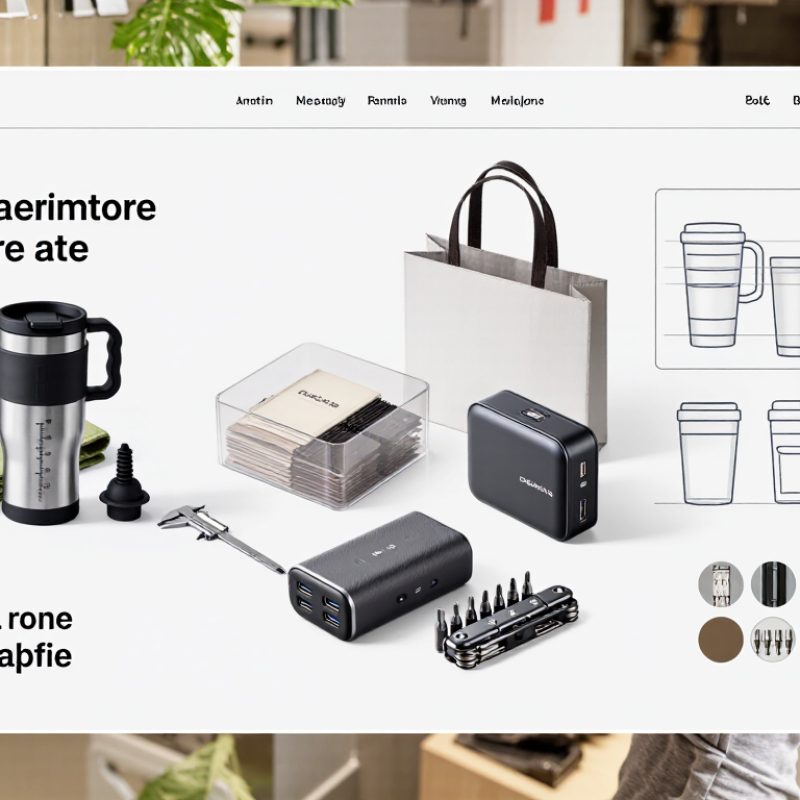
A multifunctional promotional product should begin with a clear purpose, not a list of features. Define the main action first: will recipients write, charge, organize, carry, or clean with it? Purpose comes first. A desk organizer with a phone stand may serve office workers, but it may feel irrelevant to field technicians. Audience details matter, including work setting, age, mobility, and daily frustrations. The 2023 ASI Ad Impressions Study reported that 85% of recipients remembered the advertiser on a promotional item. However, visibility alone does not create value. The item must solve a small, familiar problem.
Use interviews, event observations, and purchase data before selecting materials or functions. Ask where the product will be used and what users already carry. A compact notebook with a pen loop may suit conference attendees, while a reusable bottle with measurement marks may fit active teams. The PPAI 2024 Promotional Products Consumer Study found that usefulness strongly influences recipients’ opinions of promotional products. Keep it useful. Too many functions can increase weight, cost, and failure points. That is an easy mistake. A product can look innovative but remain untouched in a drawer. Test one prototype with the intended audience, then record what people ignore, misuse, or praise. My own planning bias would favor elegant features, yet users often prefer simpler tools. Design decisions should follow observed behavior, not internal assumptions.
Useful functions should guide every multifunctional promotional product decision. A product must support daily routines, not merely display more features. A notebook with a phone stand can serve meetings, travel, and remote work. A reusable bottle with time markers can encourage hydration throughout a workday. Keep controls simple, surfaces durable, and logos visible without dominating the design.
The 2023 Ad Impressions Study by the Advertising Specialty Institute found that 85% of recipients could recall the advertiser on a promotional item. Its findings also showed that usefulness strongly influenced whether people kept products. This supports a practical design test: can the recipient use the item within ten minutes of receiving it? If not, the extra function may be decoration. Small details matter, including a comfortable grip, readable markings, and packaging that explains the feature clearly.
Promotional Products Association International research has repeatedly identified usefulness as a major reason recipients retain promotional products. Designers should still question assumptions. Multifunctionality can increase cost, weight, repair problems, and material waste. More is not always better. Test prototypes with different users, including people with limited dexterity or changing work environments. Record which functions they use, ignore, or misunderstand. Then remove the weakest feature, even when it looks impressive. A focused product often supports the user—and the brand—more reliably.
Multifunctional products should solve a real daily problem, not merely display a logo. PPAI’s 2024 market report valued the promotional products industry at about $26.6 billion in 2023, showing strong demand for useful items. Start with one core function, then add a practical second use. A compact desk organizer with a phone stand is clearer than a product with five confusing features. Test the opening, grip, cleaning, and storage before approving production. Small flaws matter.
Materials must match the product’s expected life. Recycled polyester can suit a lightweight pouch, while stainless steel may fit a reusable bottle or tool. Ask suppliers for recycled content, durability tests, care instructions, and relevant safety documentation. According to the Ellen MacArthur Foundation, keeping products and materials in use supports a circular economy, but recycled content alone does not guarantee better performance. That deserves scrutiny. A fragile “eco” item can create more waste than a durable conventional one.
Size controls usefulness, shipping cost, and logo visibility. Measure the product in a hand, bag, or vehicle compartment before finalizing dimensions. The ASI 2023 Ad Impressions Study reported that promotional bags can generate thousands of lifetime impressions, but only when recipients continue using them. Keep brand placement visible without making it uncomfortable. Use a 25–35 millimeter clear area around the mark, and avoid seams, curves, buttons, or high-friction zones. Put secondary messaging inside the product. Often, less works better.
How to Design Multifunctional Promotional Products 2026?
A multifunctional product must solve a real problem without creating new risks. The 2023 ASI Ad Impressions Study reports that 85% of consumers remember the advertiser on a promotional item. That recall depends on repeated use. Test every function separately, then test them together. Check buttons, hinges, charging ports, sharp edges, heat, and small detachable parts. A compact desk accessory may look clever, but it can fail after one careless drop.
Safety testing should match the product’s actual environment. Use realistic loads, moisture exposure, temperature changes, and repeated handling. For electronic items, inspect battery protection and charging stability. For products used near food or skin, verify material suitability and surface cleanliness. Durability testing also needs measurable limits, such as 1,000 opening cycles or a one-meter drop. The first prototype may fail. That is useful evidence, not wasted money. Production feasibility matters too. A design requiring seven manual assembly steps may become inconsistent at scale.
Tips: Create a simple test matrix before sampling. Record failure points with photos and measurements. Ask factory engineers to review assembly time, tooling, tolerances, and material availability. Keep one feature removable if it complicates repairs or quality checks. Do not trust appearance alone. A product can feel premium yet perform poorly. Review independent laboratory results where risk is significant, and leave time for a second pilot run.
| Product Concept | Primary Functions | Functionality Test | Safety Requirements and Checks | Durability Test | Production Feasibility | Validation Status |
|---|---|---|---|---|---|---|
| Insulated Bottle with Phone Stand | Vacuum-insulated beverage container Foldable smartphone stand in the lid Leak-resistant screw closure | Thermal retention target: at least 6 hours for hot or cold contents Stand supports devices from 4 to 7 inches Leak test: inverted for 10 minutes with no visible leakage | Food-contact materials should comply with applicable food-contact regulations Rounded edges and no exposed sharp metal parts Lid remains securely attached during normal use | 500 open-and-close cycles for the stand hinge 1.0 m controlled drop test on a filled, closed unit No functional failure or permanent leakage after testing | Stainless-steel body with injection-molded lid Two-piece tooling structure reduces assembly complexity Estimated assembly: 5 to 8 manual steps | Suitable for Pilot Production |
| USB-C Desk Organizer with Wireless Charging Pad | Stationery storage Wireless phone charging surface USB-C output port for wired charging | Charging output target: up to 10 W for compatible devices Charging alignment tested with devices from 4 to 7 inches USB-C connection tested for 1,000 insertion cycles | Over-temperature, over-current, and short-circuit protection required Surface temperature target: below 45°C in normal indoor use Use a certified external power adapter where applicable | 8-hour continuous charging test 1,000 USB-C insertion cycles 1,000-hour standby reliability target for the charging module | ABS or recycled ABS housing with a standard electronic module Requires electrical safety and electromagnetic compatibility review Estimated assembly: 8 to 12 steps | Compliance Review Required |
| Reusable Tote Bag with Detachable Cooler Insert | Reusable shopping or event bag Removable insulated food-and-drink compartment Adjustable shoulder straps | Carries a 10 kg distributed load for 30 minutes Cooler insert accommodates at least four 500 ml containers Zipper operation completed in 300 cycles without jamming | Dye and coating selection should meet applicable textile chemical limits No accessible sharp fasteners or broken needle points Insulated insert must be removable for cleaning | Strap seam strength target: at least 150 N 10 kg load suspended for 1 hour without seam separation 20 machine-wash or care-cycle evaluation recommended | Polyester or recycled polyester body with low-part-count insert Screen printing or heat transfer supports small-to-medium batches Estimated assembly: 4 to 7 sewing and finishing steps | Suitable for Volume Production |
| Key Finder Card with Rechargeable Battery | Bluetooth-based item location support Audible alert function Rechargeable battery with status indicator | Connection range target: up to 50 m in open indoor conditions Alert volume target: at least 60 dB measured at 1 m Battery operating target: at least 3 months under typical use | Lithium battery requires protection against overcharge and deep discharge Battery enclosure must resist puncture during normal handling Wireless and battery compliance testing required before sale | 300 charge cycles with at least 80% retained capacity target 1.0 m drop test on six faces and four edges Button tested for 10,000 actuations | Requires firmware, mobile application, battery, and radio module Higher development cost and longer certification lead time Estimated assembly: 10 to 15 steps | Engineering Validation Required |
| LED Safety Armband with Emergency Whistle | Flashing or steady LED visibility Adjustable reflective armband Integrated emergency whistle | LED visibility assessed from 100 m in low-light conditions Minimum runtime target: 8 hours in steady mode Armband fits approximately 22 to 40 cm circumference | Battery compartment secured against accidental opening Low-voltage circuit with insulated wiring Reflective material should remain securely bonded to the textile | On/off switch tested for 5,000 cycles Splash-resistance target equivalent to IPX4 design intent Elastic strap tested through 1,000 stretch cycles | Textile strap, low-voltage LED board, and molded whistle Simple construction supports rapid assembly Estimated assembly: 5 to 9 steps | Suitable for Pilot Production |
| Foldable Travel Adapter with Cable Storage | Multi-region plug compatibility Integrated cable storage compartment USB charging output | Plug mechanisms operate through 500 deployment cycles USB output maintained under rated load for 4 hours Cable compartment accepts a 1 m charging cable | Electrical insulation and grounding design must meet the target market requirements Over-current and over-temperature protection required Flame-retardant enclosure material recommended for mains-powered designs | 500 plug deployment cycles 1.0 m drop test in folded configuration 4-hour full-load temperature test with no deformation | Requires specialized electrical tooling and safety testing More complex assembly than passive promotional products Estimated assembly: 12 to 18 steps | High Compliance Risk |
| Recycled Notebook with Detachable Pen Holder and Phone Stand | Writing and note-taking surface Elastic pen holder Foldable cardboard phone stand | Stand supports a 250 g device for 30 minutes Pen holder retains a standard-size pen during normal carrying Pages remain securely bound after repeated opening | Paper, adhesive, and printing inks selected to meet applicable chemical limits No exposed staples or sharp binding edges Adhesive must not detach under normal indoor temperature variation | Cover opened and closed 2,000 times Phone stand folded and unfolded 500 times Pen holder stretched 1,000 times without tearing | Paperboard, elastic, and standard binding components Suitable for offset, digital, or screen printing Estimated assembly: 3 to 6 steps | Highly Feasible |
Designing multifunctional promotional products in 2026 requires practical customization, not decoration alone.
A useful item should solve a daily problem and communicate a clear message. For example, a reusable desk pouch can hold cables, support a phone, and display a small printed message.
Select durable, easy-clean materials that match the product’s intended use. Check local labeling, safety, and recycling requirements before production.
During prototyping, test zippers, seams, and printing under repeated use. Our early sample looked attractive but collapsed when filled. That failure revealed a weak base panel.
Customization should improve function. Offer controlled choices, such as color, dimensions, and message placement, instead of unlimited variations.
Packaging also shapes perceived quality and distribution efficiency.
Use compact packaging that protects the product without adding unnecessary layers. A folded insert can explain each function, care instructions, and disposal guidance. It can also carry a scannable code for digital instructions.
Avoid oversized boxes. They increase storage space and shipping costs.
Group products by destination, event date, or recipient type before dispatch. Keep a small reserve for damaged parcels and last-minute requests.
Distribution plans often fail when teams track only outgoing quantities, not delivery conditions.
Performance tracking should connect product use with measurable behavior.
Record production costs, delivery rates, scan activity, feedback, and repeat requests. Use consent-based analytics and protect collected information.
A short survey can ask whether recipients used the pouch after thirty days. The answer may challenge expectations.
High scan rates do not always mean high product value.
Compare results by audience and distribution channel, then adjust the next design.
Some data will remain incomplete, so document assumptions rather than presenting estimates as facts.
Start with one clear purpose. Decide whether users will write, charge, organize, carry, or clean. Avoid adding features without evidence.
Study users’ work settings, ages, mobility, and daily frustrations. Observe events, conduct interviews, and review purchasing patterns. Ask what they already carry.
A phone stand can support meetings and travel. A bottle with time markings can guide daily hydration. A notebook loop keeps a pen within reach.
Include only functions people will use regularly. Extra features can increase weight, cost, waste, and failure points. More is not always better.
Give a prototype to intended users. Ask whether they can use it within ten minutes. Record ignored, misunderstood, and frequently used features.
Test buttons, hinges, charging ports, sharp edges, heat, and detachable parts. Match testing to real conditions, including moisture and repeated handling.
Set practical limits, such as 1,000 opening cycles or a one-meter drop. Record failures with photographs and measurements. Appearance alone proves little.
Ask production engineers to review assembly steps, tooling, tolerances, and material supply. Seven manual steps may create inconsistent results. A simpler structure may work better.
Teams may favor elegant features over useful ones. I might make that mistake too. User behavior should challenge internal assumptions. Simpler tools often survive daily use.
How to design multi-functional promotional products starts with a clear understanding of the campaign purpose, target audience, and practical problems the product should solve. Choose functions that are genuinely useful in daily life while supporting the intended message and making the product easy to remember. During planning, consider the product’s shape, materials, size, usability, and suitable areas for brand placement so that the design remains attractive without becoming crowded or uncomfortable.
Before production, test each function for safety, durability, convenience, and reliable performance under normal use. It is also important to confirm that the design can be manufactured consistently and within budget. Finally, prepare customization details, protective packaging, distribution methods, and a system for tracking user feedback, engagement, and campaign results. A well-designed multifunctional promotional product should combine practical value, visual clarity, dependable quality, and measurable marketing performance.

TOP Crafts