Custom metal products often leave the factory with sharp edges, exposed finishes, and shapes that resist standard cartons. A machined bracket may look sturdy, yet one loose movement can mark its coating or damage a threaded hole. How to ensure safe packaging for custom metal products starts with understanding the part, its finish, and its route. Small details matter.
Industry research helps frame the challenge. The World Bank’s 2023 Logistics Performance Index assesses logistics reliability, tracking, and shipment timeliness across countries. These measures do not report metal-packaging damage rates, but they underline how many handoffs can affect a shipment. MHI’s 2024 Annual Industry Report also examines supply-chain pressures, including resilience and operational disruption. Packaging is one practical control within that wider system, not a cure-all.
For metal manufacturers, safe packaging means more than adding bubble wrap. Clean, dry parts may need separators, corrosion-inhibiting materials, and firm restraint; heavy assemblies may need a fitted crate and clear lifting points. A real test helps. ISTA’s transport-packaging procedures provide structured methods for evaluating hazards such as vibration, shock, and compression. Yet test results cannot perfectly reproduce every route. That limitation deserves attention. A package that performs well in a lab may still fail when loading practices, moisture, or stacking conditions differ. This guide explores how to match protection to product geometry, finish sensitivity, shipping conditions, and handling risks—then verify the design before routine use.
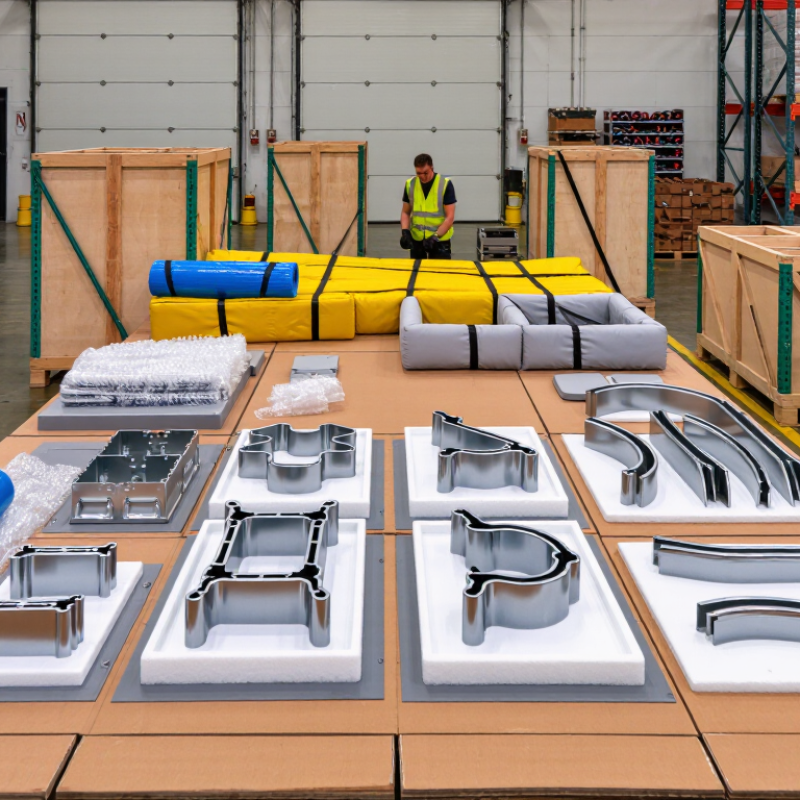
Assessing packaging starts with the metal product, not a standard box size. Record its weight, dimensions, center of gravity, and lifting points. Note sharp edges, delicate threads, welded joints, and surfaces that scratch easily. A thin stainless panel needs different protection from a heavy cast component. Small details matter.
Next, consider what can happen during storage and transit. Moisture may mark bare steel or damage some finishes. Vibration can loosen parts, while a dropped carton may bend corners or crack protective coatings. Separate finished pieces with clean foam, sleeves, or non-abrasive dividers. Secure heavy items against shifting, and keep cushioning away from areas where pressure could distort the product.
Packaging requirements should reflect the actual route, handling method, and likely stacking load. A snug fit helps, but excessive restraint can also cause damage. Test a packed sample with practical checks, such as a short vibration run or controlled drops, then inspect edges, fasteners, and finish under good light. No checklist catches everything. Even careful teams can overlook how one loose bracket rubs against a polished surface. Record damage patterns and adjust the cushioning or supports before packing the full order.
Packaging risk insight: Density affects how heavy a metal product can be for its size. For the same product volume, higher-density metals generally create greater handling and package-load demands. Density values are approximate; packaging requirements also depend on product dimensions, shape, surface finish, and shipping conditions.
Choosing protective materials starts with the metal’s surface and its journey, not with the box. A polished aluminum panel can pick up fine scratches from ordinary kraft paper, while a machined steel bracket may need protection from moisture as well as impact. Check whether parts arrive oily, dry, coated, or freshly finished; that detail changes what should touch them. Small burrs matter, too.
Use non-abrasive foam, corrugated dividers, or shaped inserts to stop metal pieces rubbing together. For corrosion-sensitive steel, corrosion-inhibiting paper or film can help, but confirm it suits the alloy and any applied finish. A sealed bag with desiccant may be useful during humid transit. Keep the desiccant from direct contact with delicate surfaces. Avoid wrapping damp parts tightly; trapped moisture can do more harm than a loose outer carton. No wrap fixes poor drying.
Match cushioning to weight. Light foam may compress beneath a dense casting, letting it strike the carton wall; thicker support can also waste space and shift if poorly fitted. Protect corners and exposed threads with caps or formed sleeves, then shake-test a packed sample and inspect it after a short trial shipment. Measure for scuffs, dents, and rust, not just a closed box. The choice is not always obvious, and I would revise it after seeing real transit damage. Check packaging against the actual route, storage time, and surface finish.
Custom metal products often fail in transit not because the box is weak, but because the part moves inside it. Packaging should account for an item’s weight, shape, finish, and handling points. A machined bracket, for example, needs support beneath its heavier sections. Exposed threads and polished faces should be kept away from hard surfaces. Small gaps matter.
Use fitted supports, blocking, or shaped cushioning to prevent sliding and rotation without pressing on delicate edges. Keep metal surfaces from rubbing together; clean, dry interleaving material can reduce scratches and limit moisture contact. For long or heavy pieces, spread the weight across a reinforced base. Secure the load against shifts when the carton tilts. Mark lifting points and orientation where these details help handlers, but do not rely on labels to restrain the product.
Test a representative packed unit with practical drop, vibration, and compression checks suited to its route and shipping method. Inspect it afterward for movement, crushed corners, loose fasteners, and finish damage. A foam layout that looks convincing on a bench may still loosen after repeated handling; revise it when testing reveals a weak point. No package is perfect.
Safe packaging for custom metal products starts with stopping movement. A machined bracket can punch through a carton if it shifts during transit. Place sharp edges behind rigid guards, then secure the part with straps or fitted blocking. Use corrosion-resistant wrapping when moisture may reach bare steel. Keep straps snug, not tight enough to bend thin sections. A small gap can become a big problem.
Labels should remain readable after scuffing and handling. Mark package weight, lifting points, and orientation where relevant; put duplicate labels on adjacent sides. GS1’s logistics-label guidance emphasizes consistent identification and barcode placement for reliable scanning. Inspect each package before release: check strap tension, corner protection, closure, and label legibility. Photograph the sealed package and record any visible damage. The World Shipping Council reported 661 containers lost at sea in 2022–2023, a reminder that cargo faces real handling and transport risks. That figure does not measure damage to individual parcels, but it supports careful preparation. Check the inside, too. A checklist helps, though it can miss a loose insert or an awkward lifting point. One final hands-on check is worth the extra minute.
Before shipment, test the actual packed metal product, not just an empty carton. Check that brackets, panels, or machined parts cannot shift during handling. Press on the outer box and inspect the corners, seams, and internal supports for crushing or looseness. Then conduct controlled drop and vibration checks that reflect the product’s weight and likely shipping route. After each check, open the package and look for dents, rubbed finishes, broken restraints, or moisture. A clean exterior can hide damage inside.
Tips: Photograph the package before and after testing. Record the test conditions and any movement inside. Use witness marks or simple spacing checks to spot shifting. Small details matter.
Packaging tests are useful, but they cannot perfectly reproduce every truck, transfer point, or warehouse condition. That gap deserves attention. If a part has sharp edges or a delicate coating, add edge protection and non-abrasive separators, then inspect them after testing. Confirm that the product can be removed without scraping it, too. If supports collapse or the part moves, revise the packaging and repeat the checks before approving the shipment.
Consider its finish, weight, and condition. A polished panel may need non-abrasive separators, while steel may also need moisture protection.
Not always. Kraft paper can scratch a polished aluminum surface, so use clean, non-abrasive foam or fitted dividers.
Corrosion-inhibiting paper or film may help if it suits the alloy and finish. A sealed bag with desiccant can help, but keep the desiccant away from delicate surfaces.
No. Trapped moisture can cause more harm. Dry parts before packing; no wrap fixes poor drying.
Fit supports beneath its heavier sections and block sliding or rotation. Protect exposed threads and corners with caps or formed sleeves.
Light foam may compress and let the casting hit the carton wall. Test thicker support, but check that it fits securely and does not shift.
Test a representative packed product with controlled drop and vibration checks suited to its route. Then inspect for dents, scuffs, moisture, and broken restraints.
Photograph the package before and after testing. Record test conditions and movement; witness marks can reveal small shifts.
No. Tests cannot reproduce every truck or warehouse. I would revise the design after real damage, even if the first test looked convincing.
How to ensure safe packaging for custom metal products begins with assessing each item’s weight, shape, surface finish, and vulnerability to scratches, dents, corrosion, or movement. These risks determine the packaging requirements and help guide the choice of protective materials, such as cushioning, separators, moisture barriers, and sturdy outer containers. Materials should protect the product without creating unnecessary bulk or making handling difficult.
Packaging design should account for lifting, stacking, and the stresses products may encounter during transit. Secure each item so it cannot shift, and use clear labels to communicate handling and orientation needs. Before shipment, inspect every package for damage, loose contents, and missing protection. Finally, verify packaging performance through practical checks, such as handling and movement tests, and adjust the design when needed. A consistent process helps custom metal products arrive in the expected condition.

TOP Crafts