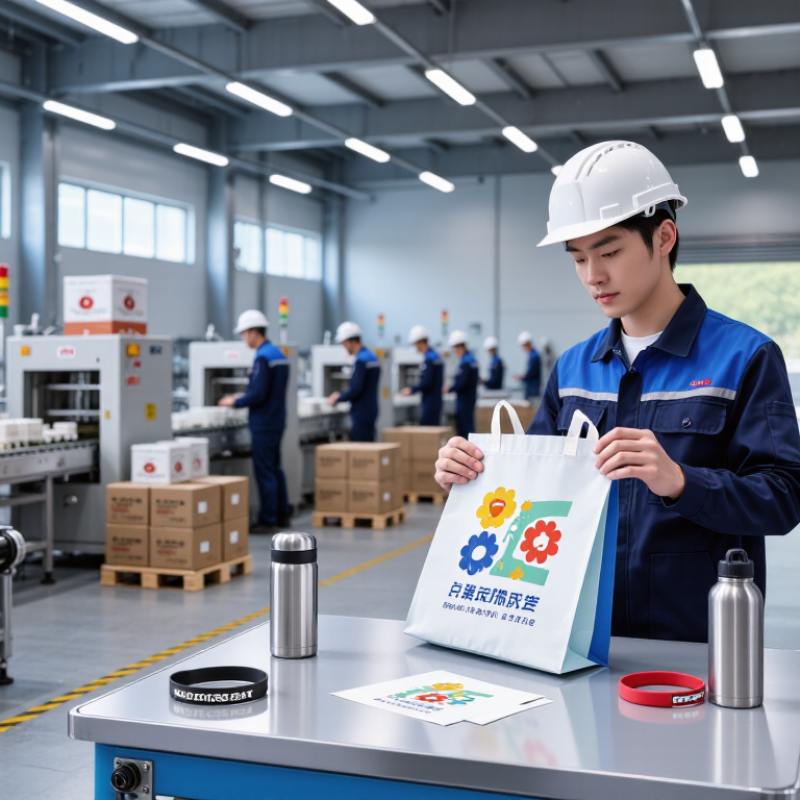
How to control production time for custom promotional items is a practical question for every China sourcing project. A printed tote bag, metal bottle, or silicone wristband may look simple, yet each requires artwork checks, material preparation, sampling, production, inspection, and shipping. Small delays often begin with unclear colors, incomplete dimensions, or late approval of a pre-production sample.
Mark Graham, founder of commonsku and a respected promotional-products technology leader, offers a useful production principle: “Production time is controlled before the order is placed, not after the factory starts.” This idea supports the central focus of this guide. Buyers should confirm factory capacity, material availability, decoration methods, packaging details, and realistic delivery dates before paying a deposit. A written timeline should show every milestone, including artwork approval and final quality inspection.
The following ten tips examine how experienced buyers can reduce avoidable delays when producing custom promotional items in China. They cover supplier communication, clear specifications, sample decisions, order batching, production buffers, and shipping coordination. A factory may promise seven days, but that promise can change when raw materials arrive late or several urgent orders enter the workshop. Be careful.
A perfect schedule is unrealistic. Even strong suppliers face equipment faults, color variation, or port congestion. The more reliable approach is to build reasonable buffer time, request dated progress updates, and keep one approved sample beside the production line. These methods cannot remove every risk, but they can make delays visible earlier and decisions more controlled.
A reliable custom product timeline begins with a signed specification sheet. Define materials, dimensions, colors, packaging, tolerances, and approval owners. Then divide production into visible milestones: design freeze, engineering review, prototype, tooling, pilot run, inspection, mass production, and shipment. Each milestone needs a target date, responsible person, and acceptance standard. A shared timeline should show both factory working days and transport days. In practice, unclear artwork approval often delays tooling more than machining itself. Keep written approval records. Small details matter.
Industry data supports realistic planning. The McKinsey Global Institute reported that supply chain disruptions lasting one month or longer occur every 3.7 years on average. Therefore, add time buffers around material purchasing and export preparation. The 2024 PMI Pulse of the Profession report also highlights the importance of structured project practices and clear performance measurement. Track sample approval time, first-pass quality, production completion, and inspection release. A factory should report these dates weekly, not only when problems appear.
Do not promise an elegant timeline without testing it. A useful plan includes a pilot run before full production, especially for new molds or complex assemblies. Reserve three to seven working days for sample corrections when possible. This is not always enough. Supplier capacity, holiday schedules, material shortages, and rework can change the result. Review the timeline after every milestone, and record why dates moved. Honest delay analysis improves the next order more than optimistic promises.
Selecting a reliable Chinese manufacturer is the strongest way to control custom item production time. The supplier should show proven capacity, not only attractive quotations. Request recent production records, monthly output figures, staffing levels, machine lists, and documented on-time delivery rates. Factory evidence matters.
The WTO World Trade Statistical Review 2023 recorded China as the world’s largest merchandise exporter in 2022, with exports worth about US$3.54 trillion. This scale indicates deep industrial capability, but it does not guarantee every factory performs well.
The World Bank’s Logistics Performance Index 2023 ranked China 19th globally, supporting its strong logistics environment. Still, local congestion and holiday shutdowns can change delivery schedules.
Ask for a capacity plan linked to your order quantity. It should identify raw-material arrival dates, tooling completion, pilot production, inspection points, and daily output targets. A capable supplier can explain what happens when one machine fails. Backup equipment helps.
Request samples from comparable projects. Check whether the same line will produce your order. Some factories display impressive equipment that remains unused. That detail deserves scrutiny. Review quality reports, defect rates, corrective-action records, and subcontractor controls. An independent factory audit can verify these claims, although audits may capture only one day. Keep a small time buffer, because even experienced manufacturers can misjudge custom packaging, approval delays, or seasonal labor shortages.
Custom item production in China becomes more predictable when specifications are confirmed before the factory schedules materials or tooling. A clear product brief should state dimensions, colors, functions, packaging, tolerances, and expected service conditions. Vague terms create expensive disagreements later.
Material selection needs equal attention. Name the material grade, thickness, finish, and acceptable alternatives in writing. Request samples, technical data sheets, and relevant test reports before approving mass production. A small material difference can change strength, weight, appearance, or unit cost. It can also affect production time.
Quality standards must be measurable. Replace “high quality” with inspection points, defect limits, test methods, and approved reference samples. Keep one signed sample with the production file. Add photos that show acceptable stitching, surface finish, assembly gaps, and color variation. This gives inspectors a practical comparison.
A pre-production meeting can uncover missing details. Ask the supplier to repeat the specifications in their own words. Record every decision in a dated change log. Even a minor logo position change may require new artwork or tooling. That happened in one project, and the schedule slipped because the change was treated as informal.
Do not rely on verbal promises. Confirm the final specification sheet, material approval, and inspection plan before placing the production order. Allow time for a pilot run when the design is new or complicated. It may feel slower, but discovering a problem after full production is usually much slower. Mistakes still happen. Clear records simply make them easier to detect and correct.
Custom item production in China becomes more predictable when samples guide every major decision. A factory sample should confirm dimensions, materials, colors, stitching, printing, and packaging details. Do not rely on photos alone. A small color difference can become obvious across 5,000 units. Ask for a physical sample whenever texture or fit matters.
Tips: Send one detailed specification sheet with marked photos. Record measurements and acceptable tolerances. Request a pre-production sample before bulk manufacturing. Approve it in writing, with the date and revision number. Keep one signed sample for comparison during inspection. This simple record prevents “we understood it differently” discussions.
Pre-production approval should include more than appearance. Check the product after normal handling, packing, and transport simulation. A sample may look perfect under factory lights but fail after being boxed for two days. Allow time for corrections, material replacement, and a second sample. Rushing approval often creates larger delays later. In practice, buyers sometimes approve too quickly because the schedule feels tight. That decision can be expensive. A realistic production plan also includes a buffer for revisions, especially when custom materials are involved. Clear approval gates help the factory start confidently and help buyers detect problems before mass production.
| No. | Production-Time Control Tip | Sample or Approval Required | Recommended Timing | Key Acceptance Criteria | Document to Release | Typical Planning Benefit |
|---|---|---|---|---|---|---|
| 1 | Freeze the technical specification Confirm dimensions, materials, finishes, packaging, and labeling before sourcing begins. |
Approved product specification sheet | Before quotation and sampling | All critical dimensions, materials, colors, and functional requirements are defined. | Signed specification revision | Reduces repeated quotation and sample changes. |
| 2 | Request a first prototype Use one physical sample to verify appearance, construction, and basic usability. |
Initial prototype or engineering sample | Before bulk-material purchasing | General form, assembly method, component fit, and visible finish meet the specification. | Prototype evaluation form with photos | Finds design problems before tooling or bulk production. |
| 3 | Approve the pre-production sample Use the final production method and intended materials for the approval sample. |
Pre-production sample, also called a golden sample | Before mass production starts | Color, dimensions, workmanship, construction, and packaging match the approved reference. | Dated and signed sample approval | Prevents large-volume rework caused by an unapproved production setup. |
| 4 | Confirm color with a physical standard Do not rely only on monitor images or compressed digital files. |
Color swatch, lab dip, or printed color proof | Before material ordering and production setup | Color is assessed under agreed lighting conditions and against the approved physical reference. | Color approval record with lighting condition | Limits color corrections, remakes, and material waste. |
| 5 | Validate tooling before release Check mold, die, cutting form, fixture, or artwork plate before production use. |
Tooling trial sample or first-off piece | Before tooling approval and batch production | Critical dimensions, part alignment, surface condition, and repeatability are acceptable. | Tooling inspection checklist | Avoids production stoppages caused by incorrect tooling. |
| 6 | Approve packaging and artwork separately Verify carton markings, inserts, labels, barcodes, and packing configuration. |
Packaging mock-up and final artwork proof | Before printing or packaging material purchase | Text, dimensions, barcode readability, language, orientation, and packing quantity are correct. | Approved artwork and packing specification | Prevents disposal or reprinting of finished packaging materials. |
| 7 | Set measurable tolerances Define which dimensions and cosmetic conditions are critical, major, or minor. |
Dimensional report and defect reference sample | Before inspection and production release | Inspection limits are numerical where possible; defect examples are photographed and classified. | Quality control plan | Reduces subjective decisions and repeated approval cycles. |
| 8 | Use a pilot run Produce a small controlled quantity to verify line setup, labor steps, and inspection points. |
Pilot batch or first production lot | Immediately after pre-production approval | Process sequence, output consistency, assembly time, and defect controls are confirmed. | Pilot-run report and corrective-action list | Detects process problems before the full order is completed. |
| 9 | Control approval turnaround time Assign one decision owner and use a written approval deadline for every sample. |
Approval tracker with status and due date | From first sample through shipment release | Each comment has an owner, action, deadline, and clear approval status. | Version-controlled approval log | Prevents production waiting for unclear or conflicting feedback. |
| 10 | Perform a final pre-shipment inspection Release goods only after quantity, quality, packaging, and shipping marks are checked. |
Final inspection sample and shipment release checklist | Before loading and document submission | Finished goods match the approved sample, order quantity is correct, and cartons are suitable for transport. | Final inspection report and release authorization | Avoids shipment holds, sorting, and destination-side corrections. |
Planning note: Production timing varies by product complexity, material availability, tooling requirements, order quantity, inspection method, and approval speed. The checkpoints above are standard manufacturing controls used to reduce avoidable delays.
Custom item schedules need visible control, not optimistic promises. For China-made products, lock specifications, approved samples, and tolerances before production starts. Build a milestone calendar covering materials, cutting, assembly, inspection, packing, and dispatch. Ask for daily progress photos with timestamps and quantities. Compare actual output with planned output each day. Use red, amber, and green status codes. Make delays visible.
Inspect raw materials before manufacturing. Check dimensions, color, and surface quality. Use an in-process inspection after the first production batch. A final inspection should verify quantity, packaging, labels, and function. Hold shipment when critical defects remain. The 2024 Pulse of the Profession report from the Project Management Institute estimates that 11.4% of project investment is wasted through poor performance. Small inspection gaps can become expensive rework. I still allow a controlled correction window, because rigid schedules can hide defects. That judgment can be wrong.
Coordinate shipping before goods are ready. Confirm carton dimensions, cargo weight, export documents, booking deadlines, and port cutoffs with the logistics team. UNCTAD’s Review of Maritime Transport 2023 states that ships carry over 80% of global merchandise trade by volume. One missed booking can therefore extend delivery far beyond factory delays. Keep a three-to-five-day buffer for reinspection, packing changes, and carrier disruption. Do not rely on one progress update. Require evidence from production, quality control, and shipping records.
This planning chart shows typical calendar-day ranges for a custom manufacturing order. Clear specifications, approved samples, material tracking, in-process inspections, final quality checks, accurate shipping documents, and early freight coordination help prevent avoidable delays.
Start with a signed specification sheet covering materials, dimensions, colors, packaging, and tolerances. Show design freeze, engineering review, prototype, tooling, pilot run, inspection, production, and shipment. Give every stage a target date, owner, and acceptance standard. Include factory working days and transport days.
Record each approval in writing, including the date, revision number, and responsible person. Keep marked photos and one signed physical sample. This reduces conflicting interpretations. It does not remove every misunderstanding.
Photos cannot reliably show texture, fit, stitching, or small color differences. Request a physical sample when touch, appearance, or fit matters. A color difference across 5,000 units can become obvious. Check details under normal lighting.
Check dimensions, materials, colors, stitching, printing, packaging, and tolerances. Test the sample after handling, packing, and transport simulation. A sample can look perfect under factory lights. Then fail inside a box.
Reserve three to seven working days when possible. Use this time for measurements, material replacement, and revised samples. Complex items may need longer. A rushed approval can create a larger delay later.
Track sample approval time, first-pass quality, production completion, and inspection release. The factory should report these dates weekly. Do not wait for a problem report. Small date changes need written reasons.
Add buffers for material purchasing, holidays, supplier capacity, shortages, rework, and shipment preparation. Transport time also needs a clear place in the schedule. Unexpected disruption happens. The buffer may still be too small.
Run a pilot before full production, especially with new molds or complex assemblies. Approve the pilot against the signed sample and specification sheet. Review the timeline after each milestone. Record why dates moved. Honest delay analysis improves future orders, even when it feels uncomfortable.
Controlling the production schedule for customized promotional items starts with a clear and realistic timeline. How to control production time for custom promotional items depends on defining every key milestone, including design confirmation, material purchasing, sample approval, mass production, quality inspection, and shipping. Setting deadlines for each stage helps identify risks early and keeps all parties aligned.
Choosing a reliable Chinese manufacturer with sufficient production capacity is also essential. Before production begins, confirm product specifications, materials, packaging requirements, and quality standards in writing. Request samples and complete pre-production approvals to prevent misunderstandings and costly revisions. During manufacturing, maintain regular communication, track progress, and arrange inspections at suitable stages. Coordinating quality checks, packaging, and shipping in advance can reduce waiting time and avoid last-minute problems. With careful planning, prompt approvals, and consistent monitoring, businesses can improve delivery reliability while maintaining the expected quality of their custom promotional items.

TOP Crafts