2026 Top Anti Fade Plating Types for Metal Crafts?

Time:2026-10-11 Author:Sienna
0%

Metal crafts face a quiet enemy: surface fading. Daily contact, skin oils, humidity, friction, and household chemicals can slowly change a bright finish. A gold-colored pendant may lose warmth around its edges, while a dark-plated buckle can reveal lighter metal beneath.

Industry reports show why finishing choices deserve closer attention. Grand View Research’s Electroplating Market Size, Share & Trends Analysis Report identifies rising demand for corrosion resistance, decorative appeal, and longer product life. MarketsandMarkets’ Metal Finishing Market report also highlights automotive, electronics, and consumer products as major users of protective surface treatments. These reports describe broad market direction, not guaranteed performance for every craft piece. That distinction matters.

In 2026, leading anti-fade options include PVD coatings, rhodium plating, ruthenium plating, palladium plating, and carefully controlled gold plating. Each option behaves differently. PVD can create a hard, consistent surface on suitable base metals. Rhodium offers strong brightness and tarnish resistance, but its brittle nature needs practical thickness control. Ruthenium creates a refined dark tone, while palladium supports a pale, premium appearance.

Finish matters. So does preparation.

For manufacturers, How to choose anti-fade plating for metal crafts depends on the base metal, target color, wear level, coating thickness, and production budget. A decorative brooch needs different testing from a frequently handled bracelet. Ask plating suppliers for adhesion tests, abrasion results, thickness records, and accelerated-aging data. Do not trust appearance alone. Small details matter. Even experienced teams can overvalue initial shine and underestimate edge wear. This guide compares the top plating types, their realistic limitations, and the testing steps needed for more dependable craft production.
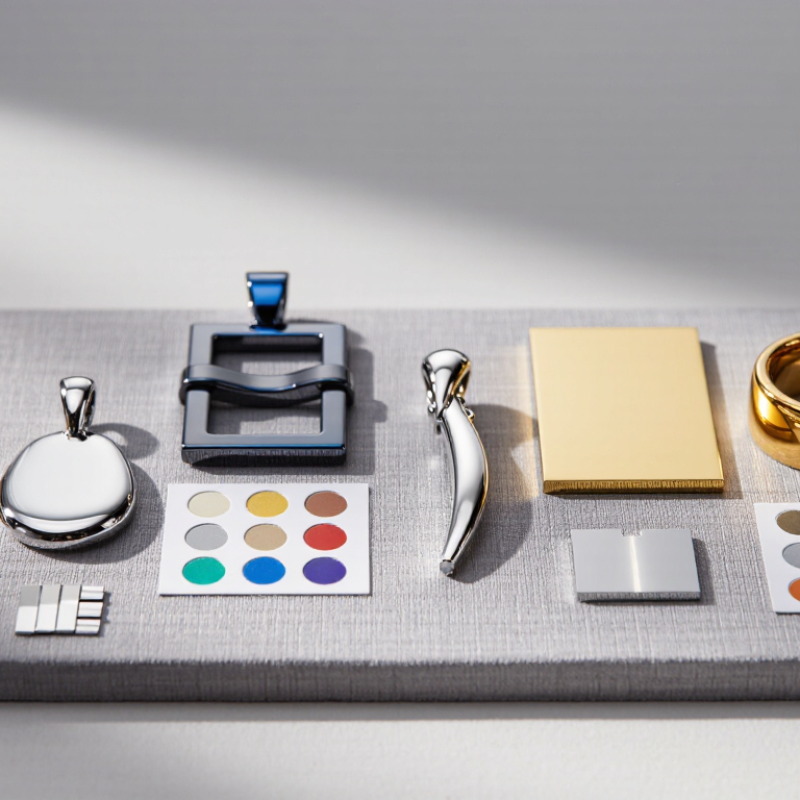
2026 Top Anti Fade Plating Types for Metal Crafts?

Anti-Fade Criteria: Coating Thickness, Hardness, Tarnish, and ΔE

In 2026, anti-fade plating should be judged by measured performance, not surface color alone. Rhodium offers high brightness and hardness, while ruthenium provides a darker, durable finish. Palladium resists oxidation and supports layered systems. PVD ceramic coatings can add strong wear resistance, but edge coverage remains a practical weakness.

Thickness is the first checkpoint. ASTM B568 recommends X-ray fluorescence for nondestructive thickness measurement. For decorative plating, many workshops target 0.5–2.5 micrometers, depending on handling and base metal. Thicker is not always better. Poor adhesion can still cause peeling. Hardness should be recorded in HV, preferably with a microhardness method such as ASTM E384. A hard coating over a soft substrate may crack during bending.

Tarnish testing needs controlled evidence. ISO 9227 salt-spray testing can reveal corrosion pathways, although it does not reproduce every household environment. Color change should be measured with a spectrophotometer, using CIE ΔE values before and after testing. Many quality teams treat ΔE00 below 2 as barely noticeable, while values above 3 deserve review. These limits are practical, not universal. I would also photograph a scratched edge after testing. That detail is often missed. Testing only the flat face can create false confidence. Surface preparation, contact with skin oils, and sealing quality can change results more than expected.

Gold Electroplating: 0.5–2.5 μm Thickness Under ASTM B488

Gold electroplating remains a practical anti-fade choice for metal crafts, but thickness must match real handling. ASTM B488 covers electrodeposited gold coatings on metallic substrates. In the 0.5–2.5 μm range, the thinnest layer suits light-contact ornaments. Heavier-use pieces need stronger process control and better base preparation.

A 2.5 μm coating can resist rubbing longer on bracelet edges, clasps, and raised lettering. It still cannot prevent damage from sharp tools or constant friction. Clean the substrate carefully. Poor adhesion often appears before visible color loss. Measure thickness with X-ray fluorescence, then inspect pores and edge coverage. These checks are more reliable than appearance alone.

The World Gold Council’s Gold Demand Trends 2024 reported total gold demand of 4,974.5 tonnes, including over-the-counter activity. Rising gold costs make controlled coating thickness increasingly important for production planning. However, thicker is not always better. Uneven deposition can create a bright center and weak corners. That is a common workshop problem. ASTM B488 supports specification and testing, but it does not guarantee permanent color retention. Sweat, polishing, chemicals, and the underlying alloy still matter. A 0.5 μm finish may look excellent at delivery, yet wear sooner than expected. That limitation deserves honest customer communication.

2026 Top Anti-Fade Plating Types for Metal Crafts

Gold Electroplating: 0.5–2.5 μm Thickness Under ASTM B488

The chart shows five reference thickness levels within the 0.5–2.5 μm range. Estimated gold mass is calculated for a 100 cm² plated area using gold density of approximately 19.32 g/cm³. Actual anti-fade performance depends on substrate preparation, deposit quality, porosity, wear, and service conditions. Confirm the required coating classification and test method against the applicable ASTM B488 specification.

Rhodium and Palladium: 0.1–1.0 μm Layers for Tarnish Control

2026 Top Anti-Fade Plating Types for Metal Crafts?

Rhodium and palladium remain practical choices for anti-fade metal crafts. A 0.1–1.0 μm layer can reduce tarnish, but thickness alone cannot guarantee long wear. Rhodium offers a bright, hard surface, while palladium can improve barrier protection beneath decorative layers. USGS Mineral Commodity Summaries 2025 reported approximately 190 tonnes of mined palladium and 26 tonnes of rhodium in 2024. These limited supply figures support careful, specification-based plating decisions.

For small craft parts, 0.1–0.3 μm may suit light-contact pieces. Higher-wear items often need 0.5–1.0 μm, depending on the base metal, surface preparation, and handling. ISO 4527 emphasizes controlled coating thickness and adhesion for electroplated engineering surfaces. ASTM B117 testing can reveal corrosion resistance, yet it does not fully reproduce sweat, skin oils, polishing, or daily abrasion. A polished sample may still fade around edges. That detail is easy to miss.

Tips: Clean and activate the substrate before plating. Measure thickness at edges, corners, and flat areas. Test sulfur exposure and artificial perspiration separately. Avoid promising “permanent” color. My practical view is cautious: a thinner, well-bonded layer can outperform a thicker layer on a poorly prepared surface. Builders should record bath conditions, current density, and inspection results for every production batch.

2026 Top Anti Fade Plating Types for Metal Crafts? - Rhodium and Palladium: 0.1–1.0 μm Layers for Tarnish Control
Plating Type Typical Layer Thickness Approx. Vickers Hardness Melting Point of Pure Metal Tarnish and Oxidation Behavior Recommended Craft Applications Expected Wear Considerations Anti-Fade Rating
Rhodium 0.1–0.3 μm Approximately 800–1,000 HV 1,964 °C Highly resistant to atmospheric oxidation and chemical tarnishing; provides a bright, reflective white finish. Decorative metal crafts, bright-finish jewelry components, silver-colored ornaments, and display pieces with limited handling. Very thin layers can show base-metal color after repeated rubbing, bending, or contact with abrasive surfaces. Very High
Rhodium 0.3–0.5 μm Approximately 800–1,000 HV 1,964 °C Excellent resistance to tarnish, discoloration, and normal atmospheric exposure. Frequently handled craft parts, decorative hardware, jewelry surfaces, and polished silver-based objects. Offers a practical balance between brightness, surface protection, and plating cost; edges and high-contact areas may still wear first. Very High
Rhodium 0.5–1.0 μm Approximately 800–1,000 HV 1,964 °C Exceptional tarnish control when the substrate is properly cleaned, activated, and sealed. Premium decorative crafts, high-contact components, polished silver objects, and long-service display pieces. Improves service life, but excessive thickness may increase internal stress or reduce dimensional accuracy if process control is poor. Very High
Palladium 0.1–0.3 μm Approximately 400–550 HV 1,555 °C Good resistance to oxidation and atmospheric corrosion; produces a soft white to gray-white appearance. Underlayers, decorative metal crafts, components requiring a neutral white tone, and parts needing improved base-metal isolation. Suitable for light handling; the lower hardness compared with rhodium makes polished areas more susceptible to scratching. High
Palladium 0.3–0.5 μm Approximately 400–550 HV 1,555 °C Strong resistance to tarnishing in normal indoor environments and useful protection against diffusion from some substrates. Craft parts, decorative fittings, silver and copper-alloy components, and multilayer plating systems. Provides more robust coverage than ultra-thin deposits; final appearance depends strongly on substrate smoothness and surface preparation. High
Palladium 0.5–1.0 μm Approximately 400–550 HV 1,555 °C Very good long-term resistance to atmospheric discoloration and base-metal migration when the deposit is continuous. High-value decorative crafts, larger metal surfaces, parts exposed to handling, and palladium-rhodium multilayer finishes. Supports longer wear life than thinner deposits, although mechanical abrasion can eventually expose the underlying metal. High
Rhodium over Palladium Palladium 0.2–0.5 μm + Rhodium 0.1–0.3 μm Final surface typically governed by rhodium hardness Rhodium: 1,964 °C
Palladium: 1,555 °C
Combines palladium’s barrier function with rhodium’s bright color and high surface hardness. Premium metal crafts, bright white decorative surfaces, jewelry-style components, and objects requiring both color stability and wear resistance. Requires accurate current distribution and thorough rinsing between layers to avoid adhesion defects or pinholes. Very High
Palladium Barrier Layer 0.3–1.0 μm Approximately 400–550 HV 1,555 °C Helps reduce substrate-related discoloration and can improve the stability of a subsequent decorative topcoat. Copper-alloy crafts, silver-based objects, mixed-metal assemblies, and multilayer anti-tarnish systems. Normally used beneath a compatible final finish; it is not intended to replace cleaning, sealing, or proper substrate preparation. High
Unplated Silver or Copper Alloy 0 μm Material dependent Material dependent Silver can react with sulfur compounds and darken; copper alloys can oxidize and develop brown, green, or dark surface films. Indoor display pieces where natural patina is desired or where periodic polishing is acceptable. Requires regular cleaning or a protective coating to maintain a bright appearance. Low

Notes: Thickness values are typical decorative-plating ranges, not universal specifications. Hardness values vary with deposit chemistry and testing method. Actual fade resistance depends on substrate preparation, porosity, adhesion, handling, humidity, sulfur exposure, cleaning chemicals, and the continuity of the plated layer.

PVD Coatings: 1–5 μm Films and 1,500–2,500 HV Hardness

2026 Top Anti Fade Plating Types for Metal Crafts?

PVD coatings offer a practical route for durable color on metal crafts. Physical vapor deposition creates a dense film in a controlled vacuum chamber. The coating commonly measures 1–5 μm thick. It is remarkably thin. Depending on its composition and process settings, hardness may reach 1,500–2,500 HV on the Vickers scale. This hardness helps resist scratches from handling, display fixtures, and light abrasion.

Performance depends on more than hardness. A clean, well-polished substrate supports stronger adhesion and a smoother appearance. Small polishing marks can remain visible beneath a bright finish. Process temperature also matters, especially for delicate alloys or assembled parts. Technicians should check film thickness, adhesion, color uniformity, and surface defects across several pieces, not just one sample.

A practical evaluation uses rubbing, humidity exposure, sweat simulation, and mild chemical contact. These tests reveal whether the finish truly resists fading in its intended environment. PVD can slow color loss, but it cannot make a craft piece permanently unchanged. Edges, raised patterns, and frequently touched areas usually wear first. I would also question any hardness claim without a defined test method, load, and coating structure. Numbers alone can look impressive. They do not replace process control or realistic service testing.

Testing and Selection: ISO 9227, ASTM B117, Wear, and Color ΔE

In 2026, anti-fade plating for metal crafts should be selected through evidence, not appearance alone. A bright sample can still lose color quickly during handling. Ask for coating thickness, substrate preparation, and curing records. These details often explain inconsistent results.

ISO 9227 salt spray testing helps compare corrosion resistance under controlled conditions. ASTM B117 provides another widely used salt-fog method. Neither test perfectly represents sweat, sunlight, friction, or household cleaning. That limitation matters. Record blistering, rust, peeling, and color change at fixed intervals. Photograph each panel under the same lighting. Small process errors can distort comparisons.

Wear testing should imitate real contact, such as repeated rubbing with fabric or a controlled abrasive load. Measure color before and after testing with ΔE values, preferably using the same instrument and lighting conditions. A low ΔE suggests better color stability, but it does not prove visual acceptance for every craft. In one early screening, we focused too heavily on salt spray hours and overlooked edge wear. The result looked impressive in the report, yet the handle faded quickly. A stronger selection plan combines corrosion exposure, rubbing cycles, and color measurement on flat areas, edges, and textured surfaces. Retest unusual finishes. They often behave differently.

FAQS

What layer thickness suits small metal craft parts?

Light-contact pieces may use 0.1–0.3 μm layers. Higher-wear parts often need 0.5–1.0 μm. Thickness alone cannot guarantee long wear.

How do rhodium and palladium differ in protective plating?

Rhodium creates a bright, hard surface. Palladium can strengthen barrier protection beneath decorative layers. The better choice depends on the base metal and intended handling.

Can a thin, well-bonded layer outperform a thicker coating?

Yes, sometimes. Poor preparation can weaken a thick coating. A clean, activated surface usually supports better adhesion and longer wear.

What thickness and hardness are common for vacuum-deposited films?

These films commonly measure 1–5 μm thick. Hardness may reach 1,500–2,500 HV. The exact result depends on composition and process settings.

Which areas of a craft piece usually fade first?

Edges, corners, raised patterns, and frequently touched areas wear first. A polished sample may still fade around its edges. That detail is easy to miss.

What should be checked before approving a plating batch?

Check thickness on flat areas, edges, and corners. Inspect adhesion, color uniformity, surface defects, and visible polishing marks. Record bath conditions, current density, and inspection results.

Do salt spray tests predict everyday color stability?

Not completely. Salt spray can compare corrosion resistance under controlled conditions. It does not fully reproduce sweat, skin oils, rubbing, sunlight, or household cleaning.

How can color fading be measured more realistically?

Measure color before and after testing with ΔE values. Use consistent lighting and the same measuring instrument. Combine humidity, rubbing, sweat simulation, and mild chemical exposure.

Should a coating be advertised as permanent?

No. Even hard coatings can change with daily abrasion. A cautious claim is more honest, especially when testing misses textured surfaces or handles.

Conclusion

Choosing a durable finish for metal crafts requires balancing appearance, wear resistance, and resistance to tarnishing. Key anti-fade criteria include coating thickness, surface hardness, color stability, and ΔE color change after testing. Gold electroplating is suitable for decorative pieces, with typical thicknesses of 0.5–2.5 μm measured under ASTM B488 guidelines. Rhodium and palladium provide strong tarnish control in thinner layers of approximately 0.1–1.0 μm, making them useful where a bright, clean appearance is important.

PVD coatings offer a harder alternative, commonly forming 1–5 μm films with hardness around 1,500–2,500 HV. To determine How to choose anti-fade plating for metal crafts, compare the intended use, handling frequency, desired color, and required service life. Testing should include salt-spray exposure such as ISO 9227 or ASTM B117, along with abrasion or wear evaluation and ΔE color measurement. The best option is the finish that maintains its color and surface integrity under conditions similar to actual use.

Sienna

Sienna

Sienna is a skilled marketing professional with a deep expertise in our company’s core products and services. With a passion for innovation and detail, she plays a pivotal role in crafting insightful blog posts that not only highlight the unique features of our offerings but also provide valuable......