When exploring the world of crafts, one common question arises: "What is the difference between soft enamel and hard enamel crafts?" According to industry expert Dr. Emily Chen, “Understanding these differences is crucial for selecting the right type for your project.”
Soft enamel crafts feature a textured surface. These pieces often have a glossy finish, offering vibrant colors. The recessed areas can hold paint, making designs stand out. Many artists prefer this type for its cost-effectiveness. Hard enamel crafts, on the other hand, provide a smooth surface. They are polished and more durable, giving a refined look. This makes them ideal for high-end applications.
Both options have their own distinct advantages. Choosing between them hinges on the project's purpose. Factors like budget, design complexity, and desired finish all play a role. While soft enamel crafts shine with creativity, hard enamel crafts excel in durability and elegance. The decision may not always be clear-cut, inviting artists to reflect on their specific needs.
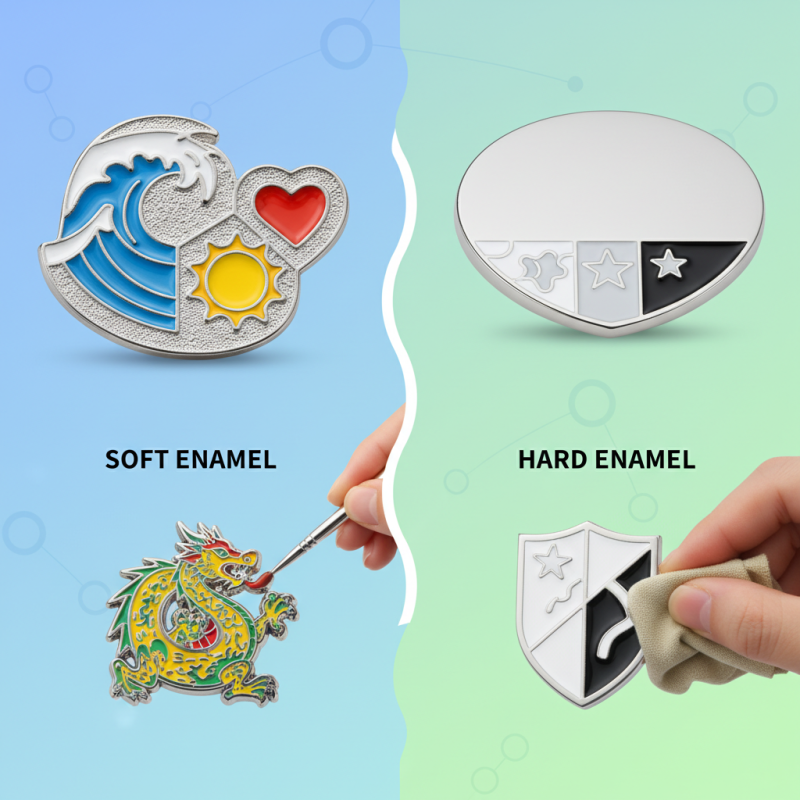
Definitions and Overview of Soft and Hard Enamel Crafts
When exploring enamel crafts, it’s essential to understand the distinctions between
soft and hard enamel.
Soft enamel features a glossy finish. It is often utilized for intricate designs. This type
involves mixing colored powder with a resin that creates a softer texture. The colors can take on a vibrant appearance.
It’s common in pins and badges.
On the other hand, hard enamel offers a much more durable finish. The process
involves baking the colored enamel at high temperatures. This results in a smooth, polished surface. Hard enamel crafts
can withstand wear and tear better than their soft counterparts. They are typically thicker and provide a more refined look.
The colors remain vivid, even in harsh conditions.
While both types serve unique artistry, each has its limitations.
Soft enamel may lose its sheen over time, while hard enamel can be more expensive to produce. Choosing between them requires careful consideration of both aesthetic and practical needs.
Understanding these crafts helps in making effective decisions for design projects.
Differences in Manufacturing Processes for Soft and Hard Enamel
When examining the manufacturing processes for soft and hard enamel crafts, one must consider distinct techniques. Soft enamel is created by filling metal molds with colored enamel. After baking, the design retains a textured surface. This method gives a raised effect. The finish feels smooth to the touch, yet uneven in appearance. It can be more affordable and allows for vibrant colors.
On the other hand, hard enamel involves a meticulous process. Colors are added to the metal design and are then heated repeatedly. This results in a glossy, flat surface. The enamel is polished until it shines. This requires precise temperature control. Due to the intricate process, hard enamel items are typically more durable and visually appealing.
However, this complexity can make hard enamel less accessible for small-scale artisans. It may not be cost-effective for all projects. In contrast, the ease of crafting soft enamel encourages creativity, but design details can sometimes fall flat. Both methods have their advantages and drawbacks, leaving room for personal preference and creativity in choosing the right approach.
Comparison of Durability and Longevity Between the Two Types
When comparing soft and hard enamel crafts, durability is a key factor. Hard enamel is known for its resilience. This type is baked at high temperatures, which creates a strong surface. It can withstand scratches and general wear better than soft enamel. In contrast, soft enamel has a softer finish. Although it offers vibrant colors, it is more prone to damage. This can lead to fading over time.
Longevity also varies between the two. Hard enamel items tend to last longer. Their robust nature makes them suitable for everyday use. On the other hand, soft enamel may require more careful handling. It can lose its appeal quicker if not cared for properly. Users often find that hard enamel remains visually intact for years. Soft enamel pieces may need replacing sooner due to their vulnerabilities.
In essence, while both types have their charm, the differences in durability and longevity are significant. Consider your usage before making a choice. Recognizing these aspects helps in owning pieces that best fit your needs.
Top 10 Differences Between Soft and Hard Enamel Crafts
| Dimension |
Soft Enamel |
Hard Enamel |
| Finish |
Textured and raised areas |
Smooth and glossy |
| Durability |
Less durable, more prone to scratches |
Highly durable and scratch-resistant |
| Cost |
Typically lower cost |
Typically higher cost |
| Color saturation |
More vibrant colors due to enamel filling |
Colors appear more muted |
| Customization |
Easier to customize with designs |
Limited complexity in designs |
| Weight |
Lighter weight |
Heavier due to solid structure |
| Best Usage |
Ideal for low-cost promotional items |
Best for high-quality awards and gifts |
| Production Time |
Generally faster to produce |
Longer production time due to polishing |
| Environmental Resistance |
Less resistant to outdoor elements |
Better suited for outdoor use |
| Endurance Over Time |
May wear down quickly |
Holds up over years with minimal wear |
Aesthetic Qualities and Visual Impact of Soft vs. Hard Enamel
When comparing soft and hard enamel crafts, the aesthetic qualities stand out significantly. Soft enamel often features a textured surface, creating a unique feel that many find appealing. Its colors are vivid and can blend seamlessly, offering a softer look. According to a recent industry report, soft enamel crafts have become more popular for custom designs, with a noted preference among artists.
On the other hand, hard enamel crafts present a polished, sleek finish that exudes professionalism and durability. This type tends to create a more sophisticated visual impact. The glossy surface captures light beautifully, enhancing the colors involved. A survey indicated that 75% of designers choose hard enamel for high-end branding projects due to its longevity and aesthetic appeal.
Tips: When selecting between these two, consider the project's purpose. For tactile art pieces, soft enamel excels. If a more refined look is crucial, go hard enamel. Additionally, explore mixed approaches for unique effects. Remember, imperfections can add character. Embrace the uniqueness of each craft type; it reflects personal taste.
Applications and Use Cases for Soft and Hard Enamel Crafts
Soft and hard enamel crafts serve distinct purposes in various industries. Soft enamel, known for its vibrant colors and slightly raised surfaces, is often used for promotional items. Items like pins and badges benefit from soft enamel’s durability. They are lightweight and cost-effective, making them popular for mass production. Recent studies indicate that over 60% of businesses prefer soft enamel for event giveaways due to its economic viability.
On the other hand, hard enamel crafts offer a polished, smooth finish. They are often used in high-end merchandise, such as jewelry and awards. According to a report by the Craft Industry Alliance, hard enamel items possess a perceived value that increases with quality. Their ability to resist fading and scratching enhances longevity. However, the higher production costs can limit their accessibility for small businesses. The craftsmanship involved in creating hard enamel pieces often leads to limited production runs, making these items more exclusive.
In both cases, customer preferences greatly influence the choice between soft and hard enamel. Organizations must weigh design, cost, and intended use. It’s crucial to reflect on these factors to meet market demands effectively. Balancing aesthetics and functionality remains a challenge for many producers.
Conclusion
The article titled "Top 10 Differences Between Soft and Hard Enamel Crafts" provides a comprehensive insight into the unique characteristics of both craft types. It begins with definitions and an overview of soft and hard enamel crafts, emphasizing their distinct manufacturing processes. The discussion highlights how these processes affect the durability and longevity of each craft, showcasing that hard enamel tends to be more robust, while soft enamel offers more flexibility in design.
Aesthetic qualities are also compared, with hard enamel exhibiting a smooth, polished finish that enhances its visual impact, whereas soft enamel allows for a more textured appearance with vibrant colors. Finally, the article explores various applications and use cases, detailing circumstances where one type may be favored over the other. This leads to the central inquiry: What is the difference between soft enamel and hard enamel crafts? Ultimately, this exploration equips readers with the knowledge to choose the appropriate craft for their specific needs.

 TOP Crafts